Recall action guides
What to Do When Your Vehicle Has a Safety Recall: An Owner Action Plan
A practical owner workflow for interpreting a recall notice, contacting the manufacturer, arranging repairs and retaining evidence.
Identify the warning and its severity
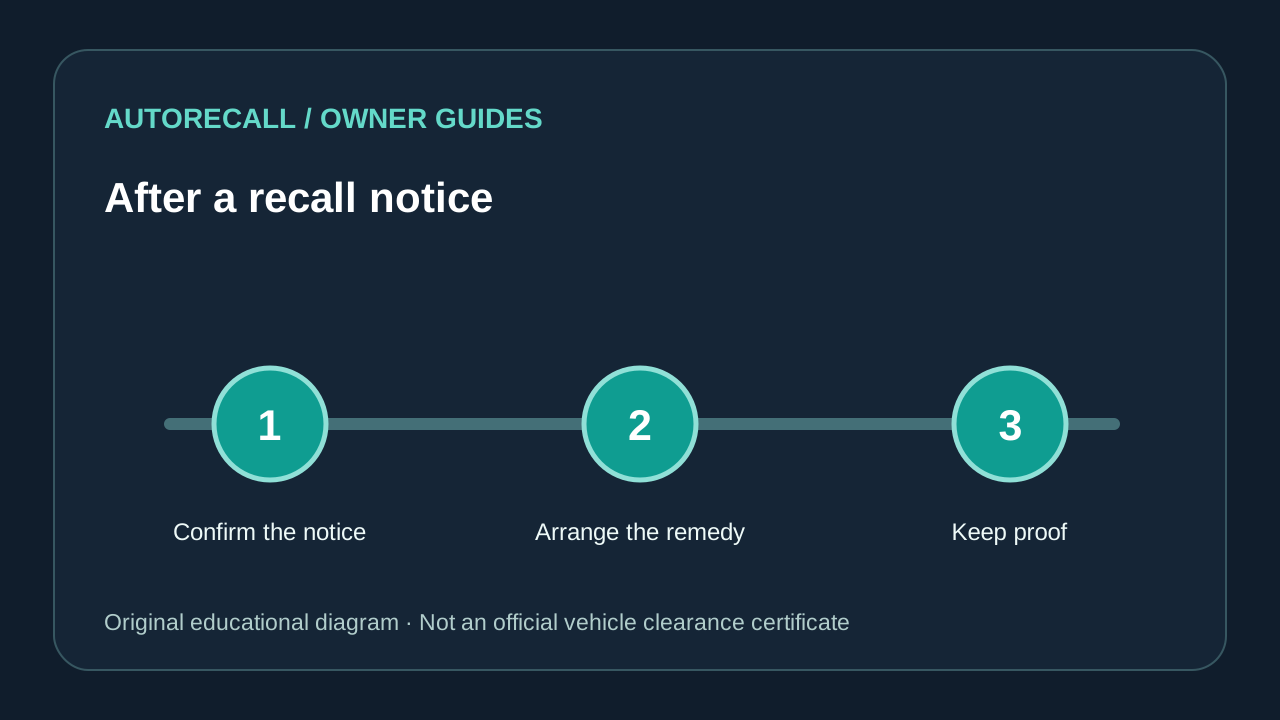
Receiving a safety recall notice can be unsettling, but the first useful action is to read the notice carefully. Find the campaign identifier, affected vehicle range, description of the defect and any immediate safety instructions. A recall might concern braking, steering, an occupant-restraint component, fuel delivery, battery hardware or another safety-related system. The seriousness depends on the defect and the official guidance; not every campaign carries the same driving restrictions.
If a notice instructs owners not to drive, park in a particular way, or avoid charging or using a vehicle, follow that instruction. Do not substitute a general internet checklist for directions issued by the manufacturer or safety authority. For an immediate safety concern, use the official manufacturer support channel and consider whether transport to a repair facility is safer than driving.
Confirm that your exact vehicle is included
A headline mentioning your make and model does not mean every vehicle with that badge is affected. Manufacturers may identify a subset by manufacturing period, serial number, equipment type or software version. Use the official VIN or registration lookup when available, and ask the authorized service network to confirm applicability. If you only have a model-level campaign match, record that as a lead requiring confirmation, not as a completed vehicle-specific check.
When contacting support, provide the recall number and the identifying details requested through the manufacturer's secure channel. Ask whether an appointment is required, whether a repair is available, and whether any interim safety advice applies. Avoid submitting personal ownership records to unverified third-party pages.
Arrange and document the remedy
Safety recall remedies are generally handled by manufacturers and their authorized service networks, although local rules and programs differ. In the United States and United Kingdom, official sources explain that eligible safety-recall remedies are generally performed without charging the vehicle owner. Ask the service center to confirm the applicable policy for your vehicle and jurisdiction before work begins. If parts are not yet available, request a follow-up plan and written instructions for safe use.
After the work, keep a service document describing the recall number, the corrective action, the date and the facility. A shop invoice saying that a general inspection took place is not necessarily evidence that a specific manufacturer recall was closed. If the vehicle is being sold, provide the buyer with the relevant recall documents while protecting personal account information.
Follow up after the appointment
A completed repair may not immediately appear in every third-party listing or aggregate database. Where the manufacturer offers a service-status check, allow its update process to run and request a written correction if necessary. If you still receive a recall notice after work was completed, compare the campaign reference and ask whether the notice concerns a newly expanded population or a different defect.
Remember that a closed recall is not a complete measure of vehicle condition. Tires, brakes, structural integrity, maintenance records and accident repairs deserve separate attention. Keep your recall follow-up as part of a broader owner file, and recheck for new campaigns periodically rather than treating a past result as permanent clearance.
Questions for the service adviser
Before visiting the workshop, ask the service adviser whether the recall part is available, how long the vehicle may need to remain there, and whether the manufacturer has issued instructions for interim use. Mention any symptoms you have actually experienced, but avoid guessing that they were caused by the recall. Request a repair summary identifying the campaign and the work completed. If the service center says the vehicle is outside the affected population, ask how that determination was made and whether it can be documented.
If the appointment is postponed, note the date and whom you spoke with. Follow up through the manufacturer or regulator when safety instructions or repair timing are unclear. Do not disable warning indicators or attempt a specialist safety recall repair on the basis of an online article. The aim of this checklist is to make the official remedy process easier to document and follow, not to replace trained technicians.